
Friday, September 19, 2014
Just Enough
Late night thought which I desire to record. This thought has often reminded me of my place in this world, as a imperfect flawed human like everyone else. I often feel more damaged then others. This leads to a sense of hope that once day this mind and body will be repaired and cured back to to its original healthy state. For for now, every step of the way - everything is 'just enough'. Just enough to get to the next step; just enough to get by till tomorrow. Often our strivings fall just short to hit our mark, but its just enough to try again. One more chance to survive. But amongst all this striving, what is really surviving? The body will soon be defeated, and nothing left to be reminded of its former belongings. What survives is the soul and its lessons learned, and survival of the soul through these trials and tests are what helps us feel like something in us belongs, even though there is nothing to hold onto but the experiences of highs and lows that bring us to our knees. These experiences submit us to the choice of continuing for the sake of hope, and belong to the lowly class of human nature for one more day in hope that we might transmute ourselves onto an fallen world which so desperately needs to be transformed. This can only be done by recognizing the things which carry light, and loving them till they burst forth as the sun. Until then, life will always be just enough.

Tuesday, July 15, 2014
CHAGA-BREW-HOW-TO
Hello Chaga-to-be-lovers!
Throughout my experience, these are the top questions people have about Chaga when first being introduced to it.
Q1. What did you just call it?
A1. I could phonetically spell this out, but here is a link to the pronunciation on this word [click on the word] Chaga.
Q2. What is it?
A2. In short, a tree fungus. Chaga has been used for thousands of years in Asia and Eastern Europe. It is only now gaining more awareness in the West, and we're sure that as more time passes, you will be hearing about Chaga more and more. Just recently, it was named the "Anti-Cancer Herb of the Year" in Russia, and its popularity is slowly beginning to grow all over the world.
Q3. What do you do with it?
A3. Consume it using a variety of methods. Actually- its now being worked into creams for the body since its chemical constituents are known to have beneficial qualities to skin health and maintenance. That's besides the point. You can take it in a pill form, or as tonic (tea) for the more effective and efficient method of enjoying it. This is why I made this video for you on how I do it now.
By the way, you do not have to use the slow cooker method as I'm showing -- you can take it straight in the teapot just like you would any lose leaf tea but this method gets the most 'bang for your buck' out of the chaga.... even if you did pay for it.
To your health and longevity!
P.S. Keep it in the fridge no longer than 2 weeks to be safe.
Throughout my experience, these are the top questions people have about Chaga when first being introduced to it.
Q1. What did you just call it?
A1. I could phonetically spell this out, but here is a link to the pronunciation on this word [click on the word] Chaga.
Q2. What is it?
A2. In short, a tree fungus. Chaga has been used for thousands of years in Asia and Eastern Europe. It is only now gaining more awareness in the West, and we're sure that as more time passes, you will be hearing about Chaga more and more. Just recently, it was named the "Anti-Cancer Herb of the Year" in Russia, and its popularity is slowly beginning to grow all over the world.
Q3. What do you do with it?
A3. Consume it using a variety of methods. Actually- its now being worked into creams for the body since its chemical constituents are known to have beneficial qualities to skin health and maintenance. That's besides the point. You can take it in a pill form, or as tonic (tea) for the more effective and efficient method of enjoying it. This is why I made this video for you on how I do it now.
By the way, you do not have to use the slow cooker method as I'm showing -- you can take it straight in the teapot just like you would any lose leaf tea but this method gets the most 'bang for your buck' out of the chaga.... even if you did pay for it.
To your health and longevity!
P.S. Keep it in the fridge no longer than 2 weeks to be safe.
Tuesday, June 17, 2014
Pottery - Tea Vessel of Choice!
Tea is the beverage of choice of the 21st century, and the vessels used for steeping and serving are fast beyond measure. The world is a large place. From antiquity the vessels used for boiling, steeping and drinking tea morph from culture to culture. What is true of all; they would have used a pottery at some point in their past.
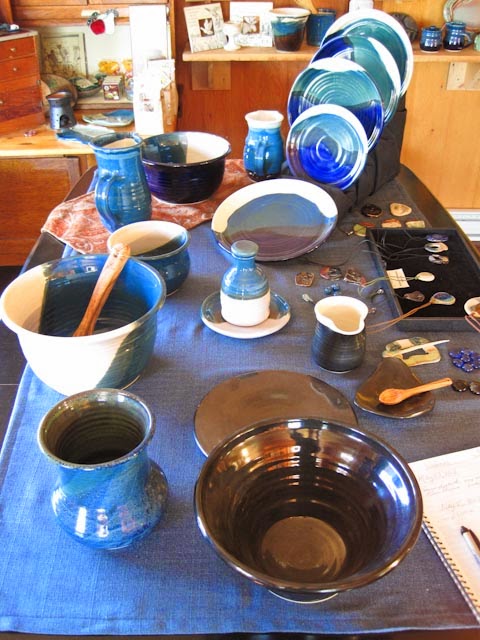 Pottery can be termed earthenware, stoneware or porcelain. Modern materials have included metal-ware, glassware and plastic (perhaps more). They all have their pros and cons. I've owned them all and have developed a taste for each one respectively (except for anything containing plastic). Above all though, I have to tip the hat to the pottery hand.
Pottery has always been pure of impurities, easy to clean, resistant to breakage, comfortable to hold, thick enough to hold a temperature but not too long. Its aesthetic appearance can be skillfully arranged with bold to delicate features, controlled masterfully with glazes which blend together to form an appearance akin to an artists palette. Every piece is uniquely distinct. The finishing movement of the potters hands can be seen in the rich glaze.
The history of the pottery is long before we can recall, or find record of (no doubt). I remember my friend who lived in the exact town where Jesus of had lived. Because of excavation, he was able to crawl under a stone to discover some old aged pottery, most likely dated 2000 years old. I picked up a piece of worn pottery that had been eroded in lake Huron for long years - no way of knowing exactly how long it had been there. These are just personal reflections, but was all know even Sumerian record 6000 BCE isn't even the beginning by our best guesses.

I'm proud to have an Aunt who has cherished this gift she has. She owns a pottery Studio in Algoma Mills, Ontario - just off Highway 17. Her work embodies careful craftsmanship and unique glazes in combinations I can only compare to a work on canvas. My kitchen will not be complete until I have it completed with her work! You'll understand why I'm being praiseworthy.


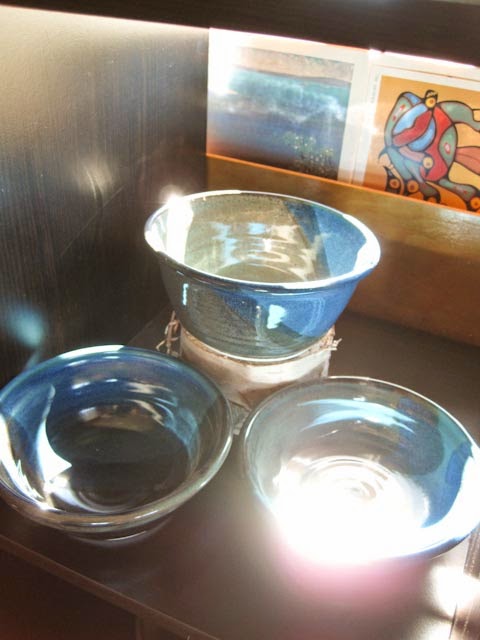
Pottery can be termed earthenware, stoneware or porcelain. Modern materials have included metal-ware, glassware and plastic (perhaps more). They all have their pros and cons. I've owned them all and have developed a taste for each one respectively (except for anything containing plastic). Above all though, I have to tip the hat to the pottery hand. Pottery has always been pure of impurities, easy to clean, resistant to breakage, comfortable to hold, thick enough to hold a temperature but not too long. Its aesthetic appearance can be skillfully arranged with bold to delicate features, controlled masterfully with glazes which blend together to form an appearance akin to an artists palette. Every piece is uniquely distinct. The finishing movement of the potters hands can be seen in the rich glaze.
The history of the pottery is long before we can recall, or find record of (no doubt). I remember my friend who lived in the exact town where Jesus of had lived. Because of excavation, he was able to crawl under a stone to discover some old aged pottery, most likely dated 2000 years old. I picked up a piece of worn pottery that had been eroded in lake Huron for long years - no way of knowing exactly how long it had been there. These are just personal reflections, but was all know even Sumerian record 6000 BCE isn't even the beginning by our best guesses.
I'm proud to have an Aunt who has cherished this gift she has. She owns a pottery Studio in Algoma Mills, Ontario - just off Highway 17. Her work embodies careful craftsmanship and unique glazes in combinations I can only compare to a work on canvas. My kitchen will not be complete until I have it completed with her work! You'll understand why I'm being praiseworthy.
 |
| Recent bead I received from her - love this glaze! |
Thursday, June 12, 2014
Over my Tea Cup
Over my Tea Cup.
by Charles J. Everett
This homely can of painted tin
Is casket precious in my eyes;
Its withered fragrant leaves within,
Beyond all costly gems I prize.
Is casket precious in my eyes;
Its withered fragrant leaves within,
Beyond all costly gems I prize.
For in those crumpled leaves of tea,
The sunbeams of long summer days,
The song of bird, the hum of bee,
The cricket's evening hymn of praise,
The sunbeams of long summer days,
The song of bird, the hum of bee,
The cricket's evening hymn of praise,
The gorgeous colors of sunrise,
The joy that greets each new-born day;
The glowing tints of sunset's skies,
The calm that comes with evening grey;
The joy that greets each new-born day;
The glowing tints of sunset's skies,
The calm that comes with evening grey;
The chatter of contented toil,
The merry laugh of childish glee,
The tonic virtues of the soil,
Were caught and gathered with the tea.
The merry laugh of childish glee,
The tonic virtues of the soil,
Were caught and gathered with the tea.
Lifeless those withered leaves may seem,
Locked fast in slumber deep as death,
But soon the kettle's boiling steam
May rouse to life their fragrant breath.
Locked fast in slumber deep as death,
But soon the kettle's boiling steam
May rouse to life their fragrant breath.
With sigh of deep content we breathe
The sweet mists rising lazily,
With eager, parted lips receive
the first ambrosial taste of tea.
The sweet mists rising lazily,
With eager, parted lips receive
the first ambrosial taste of tea.
For light and warmth and mood of men,
Whate'er the plant hath heard or seen
Or felt, while fixed in field or fen,
And stored within its depths serene,
Whate'er the plant hath heard or seen
Or felt, while fixed in field or fen,
And stored within its depths serene,
Are now transmuted into thrills
Of sense or feeling, echoes faint
From peaceful perfumed tea-clad hills,
From placid Orientals quaint.
Of sense or feeling, echoes faint
From peaceful perfumed tea-clad hills,
From placid Orientals quaint.
And fancies born in other lands,
Which dormant lie in magic tea,
Dream-castles fair not made with hands,
By some mysterious alchemy
Which dormant lie in magic tea,
Dream-castles fair not made with hands,
By some mysterious alchemy
Emerge from cloudland into sight,
Transform the sombre working-world,
The gloomy hours of day or night
From leaden hue to tint of gold,
Transform the sombre working-world,
The gloomy hours of day or night
From leaden hue to tint of gold,
Bring rest to wearied heart and brain,
Kind nature's soul to us reveal,
Enlarge the realm of Fancy's reign,
Renew the power to see and feel
Kind nature's soul to us reveal,
Enlarge the realm of Fancy's reign,
Renew the power to see and feel
The radiance of the rising sun,
The sunset's glow, the moon's pale light,
The promise of a day begun,
The rest from toil that comes with night.
The sunset's glow, the moon's pale light,
The promise of a day begun,
The rest from toil that comes with night.
And as I sip my cup of tea,
Though not a friend may be in sight,
I know that a brave company
Is taking tea with me this night.
Though not a friend may be in sight,
I know that a brave company
Is taking tea with me this night.
Antiques
Welcome tea lovers!
I have a confession to make. I get a real kick outta antique shops. I picked up this amazing 1920 or so looking-glass from Sandy's Attic in Spragge which is a stunning tabletop piece recently. Love it. But there is note only 1 - but 2 antiques shops in Spragge! Low and behold, I went to North Shore Antiques & Storage to find a emporium of antique tea paraphernalia. I picked up this tea kettle and brasso'd it till it shone, and voila! Keep your eyes peeled. The older the better I say - character cannot be faked.

I have a confession to make. I get a real kick outta antique shops. I picked up this amazing 1920 or so looking-glass from Sandy's Attic in Spragge which is a stunning tabletop piece recently. Love it. But there is note only 1 - but 2 antiques shops in Spragge! Low and behold, I went to North Shore Antiques & Storage to find a emporium of antique tea paraphernalia. I picked up this tea kettle and brasso'd it till it shone, and voila! Keep your eyes peeled. The older the better I say - character cannot be faked.
Monday, May 19, 2014
Chaga Harvest
I'm happy say that Spring is starting to warm up permanently around here - and so we do not have long before the bugs will set in and we'll be reminded of all the horrors Spring brings. But in the meantime, this is the ideal time (right before the buds bloom) to be harvesting the chaga mushroom.
My reasons for this as follows:
1. As I mentioned, it isn't black-fly season yet; saves a lot of pain when trying to hack a piece off a tree.
2. Since the bushes and trees lack foliage, you can see the chaga clusters much easier. Navigating to the chaga cluster is easier too.
3. It's easier knock / cut a chunk off the tree and trim any additional chaga out of the tree which did not come out with the first chunk.
4. Its just nice to get out and smell a growing forest again.
The ideal time for this is after the heavy Spring rain. The chunks that I found were a little dense with moisture, so they came off relatively well. I think the majority of the chaga growth happens in the spring (my observation of frequenting a certain chunk). This is probably due to birch producing a syrup that the chaga thrives off of.
Earlier in the winter, I tried hacking a chunk of a tree with a hefty knife and didn't get anywhere. Impossible to break a chunk off or get anywhere into the piece. In the Spring, I used a basic thin 'survivalist' type blade and wiggled the blade in and around a chunk of this tree which popped off in no time. Take precaution doing this though -- I lost part of a fingernail. I was trimming a bit of the birch bark still clinging to the chaga and slipped through.
Anyway, after pulling off the chunk, it was easy to trim out any bits of rich yellow chaga out from the tree and bag that. In the pictures, you'll see that I pulled off one half of the chaga to see what growth will occur in the place of the old chaga (yellow spot) compared to the other chunk I did not harvest. This way its possible to figure out later in the season(s) if the yield is getting better or worse after harvesting a hunk.
Again, if you know nothing of chaga and why the hell I'm harvesting a mushroom/tree fungus, refer to one of my old introductory blog pages here. There is a reason I tell you, and its not psychotropic hallucinogenic reasons!
To your health - Cheers!
My reasons for this as follows:
1. As I mentioned, it isn't black-fly season yet; saves a lot of pain when trying to hack a piece off a tree.
2. Since the bushes and trees lack foliage, you can see the chaga clusters much easier. Navigating to the chaga cluster is easier too.
3. It's easier knock / cut a chunk off the tree and trim any additional chaga out of the tree which did not come out with the first chunk.
4. Its just nice to get out and smell a growing forest again.
The ideal time for this is after the heavy Spring rain. The chunks that I found were a little dense with moisture, so they came off relatively well. I think the majority of the chaga growth happens in the spring (my observation of frequenting a certain chunk). This is probably due to birch producing a syrup that the chaga thrives off of.
Earlier in the winter, I tried hacking a chunk of a tree with a hefty knife and didn't get anywhere. Impossible to break a chunk off or get anywhere into the piece. In the Spring, I used a basic thin 'survivalist' type blade and wiggled the blade in and around a chunk of this tree which popped off in no time. Take precaution doing this though -- I lost part of a fingernail. I was trimming a bit of the birch bark still clinging to the chaga and slipped through.
Anyway, after pulling off the chunk, it was easy to trim out any bits of rich yellow chaga out from the tree and bag that. In the pictures, you'll see that I pulled off one half of the chaga to see what growth will occur in the place of the old chaga (yellow spot) compared to the other chunk I did not harvest. This way its possible to figure out later in the season(s) if the yield is getting better or worse after harvesting a hunk.
Again, if you know nothing of chaga and why the hell I'm harvesting a mushroom/tree fungus, refer to one of my old introductory blog pages here. There is a reason I tell you, and its not psychotropic hallucinogenic reasons!
To your health - Cheers!
 |
| Original chaga chunk of the tree. |
 | |
|
 |
| Size of the one chunk - not to shabby! |
 |
| Some of the easy trimmings taken from the tree (trimmed out with a blade). |
Saturday, May 17, 2014
Tea and Self Control
As of late, I've come to realize my evolution of tea drinking has progressed from the traditional to the modern, sadly. Let me explain.
When I desired to write a blog post on the history of tea, I was found hardly equipped with a ounce of knowledge on the subject. Just legends of yonder years in the Asiatic lands. I'd still yet like to write about this, but for now I'd like to get this thought out.
In Zen (A Japanese school of Mahayana Buddhism emphasizing the value of meditation and intuition), the tea-master was ... pretty much a profession. They sought to regulate standards of everyday life by the high standard of refinement which was obtained in the tea-room. This was to reflect a refinement of mind to be maintained. The tea-master would prepare the tea-room spotless throughout every corner, or else he was not a tea-master. You can imagine what refinement the rest would entail.
So I guess we can see the value of having such a 'profession', even in today's culture. Tea is on the rise and still climbing. Its roots go into 34 countries, so its traditions are many. But now, we brew a cup with our electronic kettles, pour it into a tea thermos and take it on the fly, drinking it till its cold. Then we invented a new drink by adding more sugar to it and tossing in ice. My point here is not to dis your milk and sugar, but the heart of this nostalgic beverage I believe has its place because its not the next thing since coca-cola, but because of what it asks to truly enjoy it.
Here it is: Tea encourages self-control. Traditionally, tea requires us to stay seated while the beverage is still hot. This can be indulged alone or with a friend/guest - the stimulating effect tea encourages healthy internal or external dialogue (from the Zen point of view). The philosophy is that it teaches us the art of augmenting our demands through honoring the simple denominator of tea. If tea is to be enjoyed, it requires us to find find our secret source of asceticism which can only be found inside, through reflection. By using tea as an 'excuse' to sit down and shut up, we attempt to lower the standards of personal gratification through material means. This brings us naturally to a state of meditation when one is convinced that tea can provide as a substitute for selfish gratification. We can say, less is more in this case --- but above all, this practice of 'sitting down an shutting up' Zen style can teach us one thing (safely and smoothly) THE ART OF SELF-CONTROL.
This to me is the heart of teaism, and it took me many years to figure this out. A Buddhist knows this - he is the master of his mind that molds and makes reality. Self-control is the axiom of all human traits to be desired. Everything deemed a positive human quality stems from this leaf. And the tea leaf can be a mediator for this. So next time you drink this beverage, practice it with the hands laid heavy and the mind awake, and charging.
I'd like to close with my favorite quote from James Allen which I believe ties up the loose ends.

When I desired to write a blog post on the history of tea, I was found hardly equipped with a ounce of knowledge on the subject. Just legends of yonder years in the Asiatic lands. I'd still yet like to write about this, but for now I'd like to get this thought out.
In Zen (A Japanese school of Mahayana Buddhism emphasizing the value of meditation and intuition), the tea-master was ... pretty much a profession. They sought to regulate standards of everyday life by the high standard of refinement which was obtained in the tea-room. This was to reflect a refinement of mind to be maintained. The tea-master would prepare the tea-room spotless throughout every corner, or else he was not a tea-master. You can imagine what refinement the rest would entail.
So I guess we can see the value of having such a 'profession', even in today's culture. Tea is on the rise and still climbing. Its roots go into 34 countries, so its traditions are many. But now, we brew a cup with our electronic kettles, pour it into a tea thermos and take it on the fly, drinking it till its cold. Then we invented a new drink by adding more sugar to it and tossing in ice. My point here is not to dis your milk and sugar, but the heart of this nostalgic beverage I believe has its place because its not the next thing since coca-cola, but because of what it asks to truly enjoy it.
Here it is: Tea encourages self-control. Traditionally, tea requires us to stay seated while the beverage is still hot. This can be indulged alone or with a friend/guest - the stimulating effect tea encourages healthy internal or external dialogue (from the Zen point of view). The philosophy is that it teaches us the art of augmenting our demands through honoring the simple denominator of tea. If tea is to be enjoyed, it requires us to find find our secret source of asceticism which can only be found inside, through reflection. By using tea as an 'excuse' to sit down and shut up, we attempt to lower the standards of personal gratification through material means. This brings us naturally to a state of meditation when one is convinced that tea can provide as a substitute for selfish gratification. We can say, less is more in this case --- but above all, this practice of 'sitting down an shutting up' Zen style can teach us one thing (safely and smoothly) THE ART OF SELF-CONTROL.
This to me is the heart of teaism, and it took me many years to figure this out. A Buddhist knows this - he is the master of his mind that molds and makes reality. Self-control is the axiom of all human traits to be desired. Everything deemed a positive human quality stems from this leaf. And the tea leaf can be a mediator for this. So next time you drink this beverage, practice it with the hands laid heavy and the mind awake, and charging.
I'd like to close with my favorite quote from James Allen which I believe ties up the loose ends.
Mind is the Master power that moulds and makes,
And Man is Mind, and evermore he takes
The tool of Thought, and, shaping what he wills,
Brings forth a thousand joys, a thousand ills: —
He thinks in secret, and it comes to pass:
Environment is but his looking-glass.
Subscribe to:
Posts (Atom)